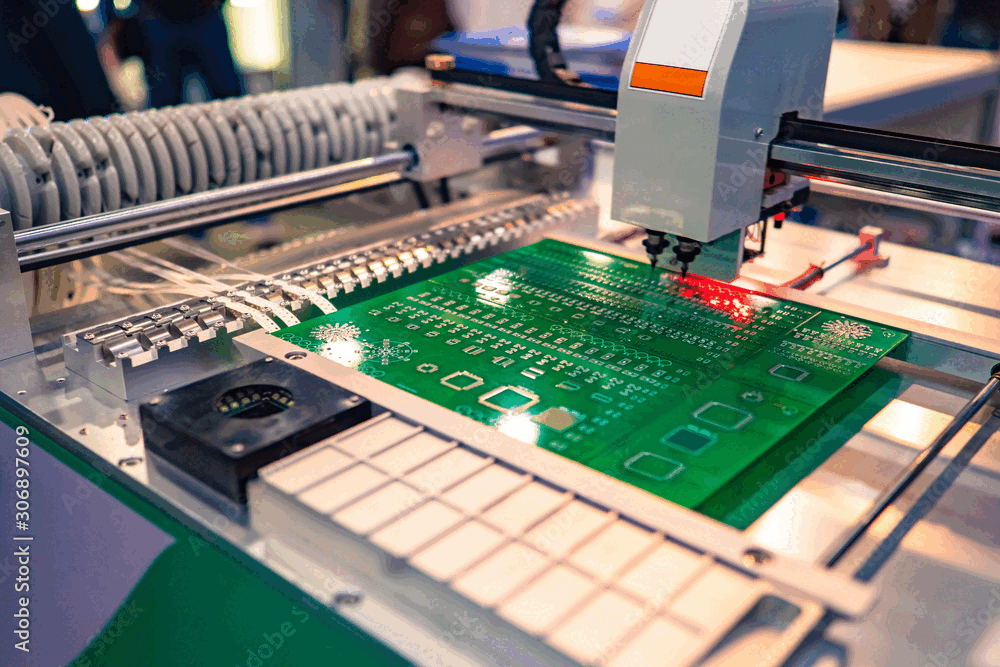
High-mix SMT lines push automated optical inspection harder than any other use case. Boards change hourly, programs change daily, and the cost of a missed defect compounds fast. Choosing a 3D AOI system for that environment is less about peak specs and more about how the system holds up under daily program changes.
What "3D" actually buys you
Traditional 2D AOI judges defects from contrast and pattern matching. It works for clean process windows but struggles with lifted leads, tombstoning on small passives, and solder joint quality on bottom-terminated components.
3D AOI projects structured light onto the board and reconstructs the surface topography. You get height, volume, and shape data on every joint — which means escapes drop sharply on coplanarity and joint-shape defects that 2D systems flag inconsistently or miss entirely.
Capabilities to weigh during evaluation
Programming speed
On a high-mix line, an operator may program two to five new boards a day. Time-to-first-board dominates total ownership cost. Look for:
- CAD/Gerber import that resolves component libraries automatically
- Golden-board learning that converges in a single pass
- A library that grows across machines, not per machine
False-call rate
A high false-call rate kills line throughput because every flagged board sits at a verify station waiting for an operator. Ask the vendor for false-call data on boards similar to yours, not on demo boards.
Repeatability across machines
If you run more than one line, identical programs need to behave identically across machines. GR&R results from a customer with a similar mix tell you more than spec-sheet numbers.
Process integration
AOI is not a black box on the line. It feeds SPC data back into the SPI machine, the printer, and the placement programs. Confirm:
- The system exports component-level defect data in a format your SPC tool can read
- Closed-loop feedback to the printer is available (not always default)
- Operator workflows for tagging, repair, and verification are documented and trained
A 3D AOI program that takes 30 minutes to set up but produces 4% false calls is more expensive than a system that takes 90 minutes to set up and produces 0.4%.
Common pitfalls
- Treating AOI as a defect filter rather than a process feedback system
- Buying on resolution alone without testing on representative boards
- Skipping operator training because "the software is intuitive" — it never is
- Not budgeting time for library tuning in the first 60 days
Where MMS fits
We support customers through the full cycle: helping scope the system, running boards on demo equipment, overseeing installation and first-board programming, and following up after the line stabilizes. Contact us if you want to walk through specific board types.